Lucent Technologies outlined a new “Acuity” Network Architecture for “service aware” networks that dynamically adjust bandwidth and QoS parameters simultaneously while managing the availability of required network resources.
Lucent said its goal is to enable optimum end user “Quality of Experience” (QoE) for enterprise services such as VoIP, video conferencing and Ethernet access, and consumer services such as high-definition video/IPTV and multi-party video gaming on both fixed and wireless devices.
The “Acuity” Network Architecture would also enable service providers to offer end-to-end service level agreements (SLAs) for particular services to specific customers, enabling them to generate additional revenue by ensuring consistently high QoS levels across their transport and metro networks.
Acuity will support the IP Multimedia Subsystem (IMS) standard and deliver specific advantages when implementing IMS to support blended lifestyle services that combine voice, data and video capabilities. It will also control non-IMS applications.
The Acuite architecture will leverage the Lucent Ethernet Router family of products (recently acquired as part of a purchase of Riverstone Network assets), the Lucent Base Station Router (announced in February 2006), and the Lucent Multimedia Access Platform (announced in October 2005).
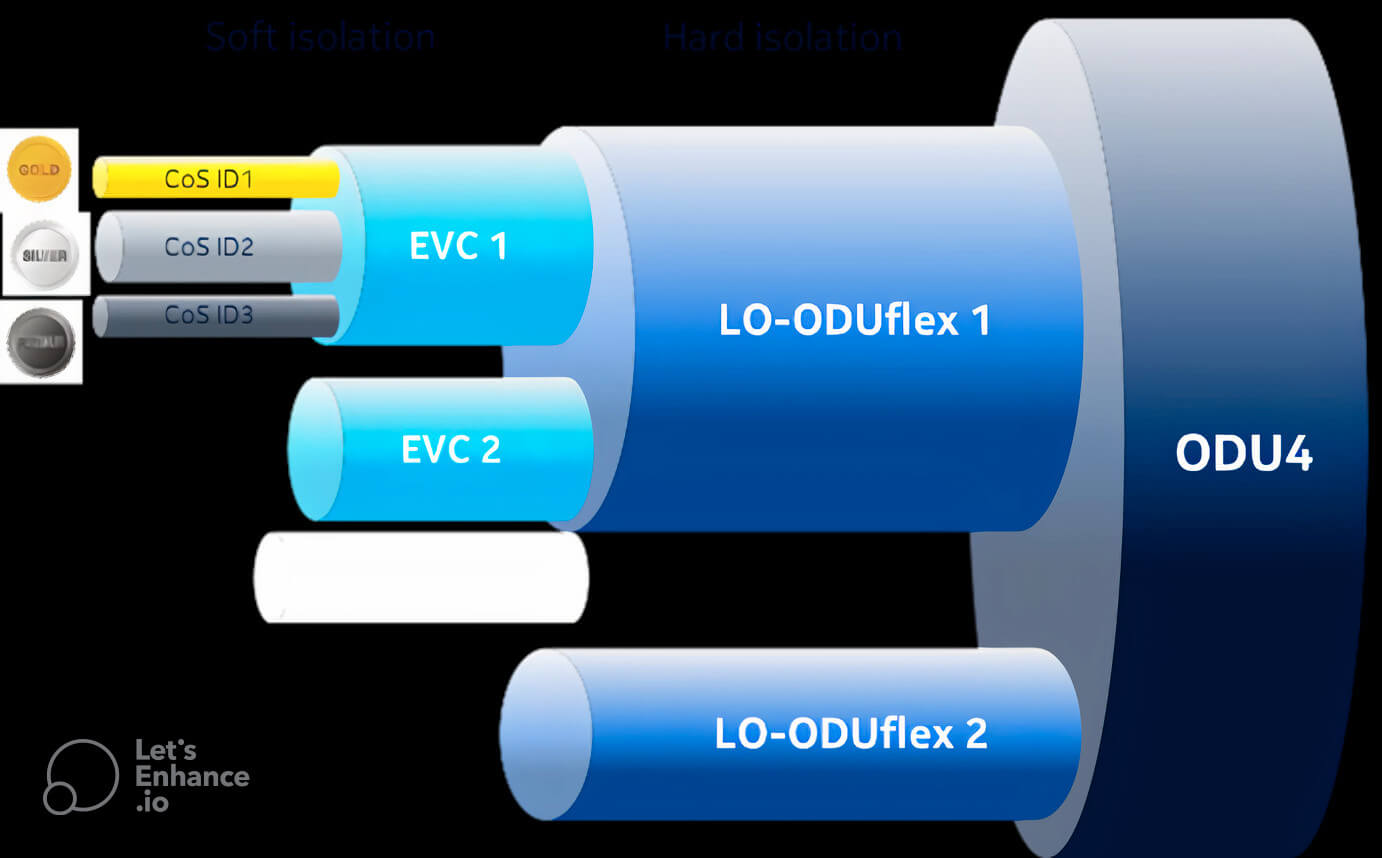
It also employs two new Lucent offerings — the Universal Packet Mux (UPM), a converged optical/packet transport platform for high-bandwidth multimedia services, and the Lucent Resource Manager, a network element that supports the dynamic control of network resources across data/transport platforms and broadband access nodes.
The Lucent Resource Manager will work in combination with bearer gateway functions distributed at the edges of the network. These two elements will work in tandem to support the dynamic allocation of bandwidth, with the resource manager making the policy decisions and the bearer gateway function, much like a traffic cop, enforcing those decisions by directly controlling the per service/session traffic, based on the policy.
http://www.lucent.com/acuity
- In October 2005, Lucent Technologies unveiled its Multimedia Access Platform, an IP-based traffic aggregator designed for high-bandwidth video/IPTV, VoIP and multimedia services delivered over DSL fiber to the home or premise (FTTx), and/or WiMAX networks. The platform is expected to enter customer trials in the first half of 2006. Lucent is positioning the platform as a key product in its broadband access portfolio and IP Multimedia Subsystem (IMS) solution. Various configurations will be offered for large- and small-scale Central Office, remote, and greenfield networks.
The single frame Multimedia Access Platform is based on the Advanced Telecommunications Computing Architecture (AdvancedTCA) and an open, Linux software foundation. It will support a range of access blades, including , including ADSL2+, VDSL2, IEEE 802.3ah Ethernet Passive Optical Networking (EPON), ITU G.984.x Gigabit Ethernet PON (GPON) at varying upstream and downstream line rates, point-to-point Ethernet and WiMAX (based on the IEEE’s 802.16e standard).
Lucent said the platform’s blade architecture will allow service providers to integrate additional capabilities or expand capacity easily by adding new cards. The Multimedia Access Platform offers up to 10 Gigabits per slot on the IP/Ethernet backplane and a full suite of Layer 2, Layer 3 and advanced packet processing capabilities, including multicasting for video, QoS/CoS, VLANs, ACLs, and security for multimedia network requirements. The platform is also IPv6 capable.
The Multimedia Access Platform will also be integrated with an IMS control layer, enabling advanced application control via SIP. This capability could be used for IMS-to-IPTV interworking.