• Home
  • Events Calendar
  • Blueprint Guidelines
  • Privacy Policy
  • Subscribe to Daily Newsletter
  • NextGenInfra.io
No Result
View All Result
Converge Digest
Tuesday, April 14, 2026
  • Home
  • Events Calendar
  • Blueprint Guidelines
  • Privacy Policy
  • Subscribe to Daily Newsletter
  • NextGenInfra.io
No Result
View All Result
Converge Digest
No Result
View All Result

Home » Merger talks of China Telecom + China Unicom

Merger talks of China Telecom + China Unicom

September 4, 2018
in All
A A

Top Chinese government officials are reviewing a proposal to merge China Telecom and China Unicom, the nation’s number 2 and 3 mobile operators, according to reports published by Bloomberg and others on Tuesday.

So far, there has not been official confirmation of the story although share prices of both companies have risen on the Hong Kong exchange.

Combined, the two carriers have 590 million mobile subscribers, compared to 905 million for China Mobile. A merger would enable a faster rollout of 5G but reduce the competitive landscape for mobile services to two players. Both carriers have reduced CAPEX in the first half of 2018 following completion of most 4G upgrades. Both reported surging mobile data traffic and an impact from increased competition and the elimination of provincial roaming charges.

Exactly one year ago, the Chinese government arranged for top Chinese tech companies, including Alibaba and Tencent, to inject RMB 78 billion (US$11.7 billion) into China Unicom in an effort to accelerate the transformation of its network. The consolidation could play to the favor of these investors.

As state-owned enterprises, both China Telecom (estimate 287,000 employees) and China Unicom (estimated 252,000 employees) have large numbers of workers and retirees.  While network integration and automation may reduce the need for so many employees from a technical perspective, from a social point of view, large-scale reductions may not be possible.

The big synergy in the merger presumably would be to reduce the rollout cost of a nationwide 5G network, which both China Telecom and China Unicom were anticipating in 2020. Both carriers have 5G pilots underway and limited trial services are expected in 2019. Full-scale nationwide rollout for each would involve upgrades to millions of base stations, and improvements to front-haul and backhaul infrastructure. China Unicom recently disclosed that it now has 910,000 4G base stations in operation. China Telecom has stated that it had 1.2 million 4G base stations in operation.

 Many 5G small cells and in-building networks are also required for the 5G upgrade plan. A merged entity presumably could build this at a much lower cost — perhaps even approaching 50-60-% of what otherwise would be spent. For network equipment, especially Huawei and ZTE, this could be bad news. For China Tower, which recently completed an IPO, this could mean only 2 potential clients on its telecom masts (China Mobile and this merged entity).

With only two mobile operators, perhaps the really intense mobile price competition in China would ease. China Mobile must make do with ARPU of RMB 58.10 (US$8.43) — about 1/6th the billing per subscriber per month as U.S. operators. China Telecom and China Unicom’s mobile ARPU is lower, at RMB 47.9. This leaves very little profit potential per subscriber, making the business case for a deep, nationwide 5G rollout more difficult for two carriers than for one..

Tags: Blueprint columnsChina
ShareTweetShare
Previous Post

Ericsson to acquire CENX for service assurance

Next Post

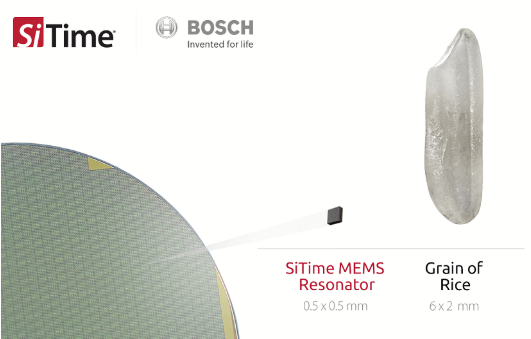
SiTime teams with Bosch on MEMS timing for 5G, IoT and automotive

Staff

Staff

Related Posts

FCC issues 2.5 GHz licenses from Auction 108
Clouds and Carriers

FCC Moves to Expel Hong Kong Telecom from U.S.

October 20, 2025
NVIDIA’s data center revenue hits $18.4 billion, up 409% YoY
Semiconductors

NVIDIA Greenlit to Resume H20 GPU Sales to China

July 14, 2025
Xiaomi Debuts its own 3nm Chipset
Semiconductors

Xiaomi Debuts its own 3nm Chipset

May 27, 2025
Spirent and Nokia show 800G interoperability
Automotive Networking

Spirent Drives Adoption of New Automotive Positioning Standard in China

December 6, 2024
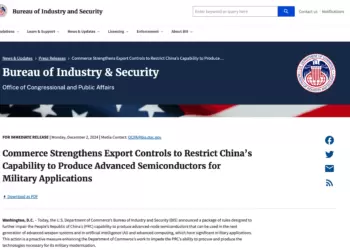
US Tightens Export Rules to Restrict China’s Advanced Chip Development
Semiconductors

US Tightens Export Rules to Restrict China’s Advanced Chip Development

December 3, 2024
Credo Launches 400G HiWire AECs for AI/ML
Data Centers

Credo Launches 400G HiWire AECs for AI/ML

September 13, 2024
Next Post
SiTime teams with Bosch on MEMS timing for 5G, IoT and automotive

SiTime teams with Bosch on MEMS timing for 5G, IoT and automotive

Please login to join discussion

Categories

  • 5G / 6G / Wi-Fi
  • AI Infrastructure
  • All
  • Automotive Networking
  • Blueprints
  • Clouds and Carriers
  • Data Centers
  • Enterprise
  • Explainer
  • Feature
  • Financials
  • Last Mile / Middle Mile
  • Legal / Regulatory
  • Optical
  • Quantum
  • Research
  • Security
  • Semiconductors
  • Space
  • Start-ups
  • Subsea
  • Sustainability
  • Video
  • Webinars

Archives

Tags

5G All AT&T Australia AWS Blueprint columns BroadbandWireless Broadcom China Ciena Cisco Data Centers Dell'Oro Ericsson FCC Financial Financials Huawei Infinera Intel Japan Juniper Last Mile Last Mille LTE Mergers and Acquisitions Mobile NFV Nokia Optical Packet Systems PacketVoice People Regulatory Satellite SDN Service Providers Silicon Silicon Valley StandardsWatch Storage TTP UK Verizon Wi-Fi
Converge Digest

A private dossier for networking and telecoms

Follow Us

  • Home
  • Events Calendar
  • Blueprint Guidelines
  • Privacy Policy
  • Subscribe to Daily Newsletter
  • NextGenInfra.io

© 2025 Converge Digest - A private dossier for networking and telecoms.

No Result
View All Result
  • Home
  • Events Calendar
  • Blueprint Guidelines
  • Privacy Policy
  • Subscribe to Daily Newsletter
  • NextGenInfra.io

© 2025 Converge Digest - A private dossier for networking and telecoms.

This website uses cookies. By continuing to use this website you are giving consent to cookies being used. Visit our Privacy and Cookie Policy.
Go to mobile version