Meta reported first-quarter 2025 revenue of $42.31 billion, up 16% year-over-year, with net income rising 35% to $16.64 billion and diluted EPS up 37% to $6.43. The company’s infrastructure spending continued to accelerate, with Q1 capital expenditures reaching $13.69 billion and full-year CapEx guidance raised to a range of $64–72 billion. The increase is driven by greater data center investments to support artificial intelligence workloads and higher costs for infrastructure hardware.
CEO Mark Zuckerberg highlighted strong traction for Meta AI, now approaching one billion monthly users, while CFO Susan Li noted the revised CapEx forecast reflects Meta’s commitment to scaling its AI data center capacity. These next-generation facilities are expected to support both internal foundation model training and inference workloads across Meta’s ecosystem, including smart glasses, LLM-powered assistants, and Family of Apps features.
- Q1 2025 revenue: $42.31 billion, up 16% year-over-year
- Net income: $16.64 billion, up 35%
- Diluted EPS: $6.43, up 37%
- Operating margin: 41%
- Free cash flow: $10.33 billion
- CapEx including finance leases: $13.69 billion in Q1
- Cash, equivalents, and marketable securities: $70.23 billion
CapEx and data center investment trends:
- Full-year CapEx guidance increased to $64–72 billion, up from $60–65 billion
- Investments are primarily allocated to AI infrastructure, including data center expansion and high-performance compute
- Operating cash flow of $24.03 billion in Q1 supports aggressive infrastructure growth
- Data center scale-out driven by demand for LLM training and AI inference
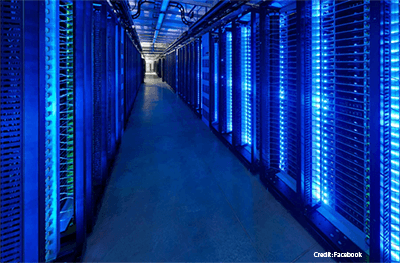
- Meta is building out dense server clusters, advanced cooling systems, and custom silicon deployments
Other business indicators:
- Ad impressions increased 5% year-over-year; average price per ad rose 10%
- Family daily active people reached 3.43 billion in March 2025, up 6% year-over-year
- Headcount stood at 76,834, an 11% increase
- Capital return included $13.4 billion in share buybacks and $1.33 billion in dividends
Outlook and regulatory factors:
- Q2 2025 revenue expected between $42.5–45.5 billion
- Tax rate forecast for 2025 is between 12–15%
- Meta warns of potential revenue impact in Europe starting in Q3 2025, related to changes in its subscription-for-no-ads model following Digital Markets Act enforcement
“We’ve had a strong start to an important year… Meta AI now has almost 1 billion monthly actives,” said Mark Zuckerberg. “Our infrastructure investments reflect our deep belief that AI will be core to our products for the next decade.”
ere are key takeaways from Meta’s Q1 2025 earnings follow-up call, particularly focused on CapEx, data centers, and AI infrastructure:
AI Infrastructure and CapEx Planning
- Meta confirmed that most of its $64–72 billion in expected 2025 CapEx is dedicated to core infrastructure, primarily to support AI workloads.
- The company is navigating a dynamic supply/demand planning environment. Some capacity constraints persist, but Meta is actively managing both availability and internal usage to address them.
- The company emphasized that long-term AI scalability—especially for both training and inference—is driving the need for more aggressive infrastructure investment now.
Custom Silicon Strategy
- Meta’s custom silicon (MTIA) chips are already being deployed for inference workloads in ranking and recommendation systems, with broader deployment expected through 2025.
- MTIA will be extended in 2026 and beyond to support training and select GenAI workloads, but Meta will continue buying from major external silicon vendors for broader needs.
AI Model Efficiency and Ads Optimization
- Meta has rolled out the GEM (Generative Ads Recommendation Model), which is twice as efficient as previous ranking models. It enhances ad performance while handling more data using less compute.
- This improved efficiency supports growing volumes of personalized ads generated by GenAI tools and helps mitigate infrastructure cost per ad.
Depreciation and Server Lifecycle
- Depreciation is a major driver of 2025 infrastructure expense growth, though it is slowing due to Meta’s decision to extend the useful lives of servers and network assets.
- Q1 2025 depreciation was $3.8 billion, but this included a one-time benefit of $826 million from the revised depreciation schedule.
Revenue Guidance Sensitivities
- Meta’s wide Q2 revenue range reflects macroeconomic uncertainties, including the impact of lower spending from Asia-based advertisers (partly due to the U.S. de minimis rule changes).
- Some advertisers are opportunistically shifting spend before policy changes, but Meta has not seen widespread pull-forward behavior.
Auction and Monetization Dynamics
- Meta confirmed that auction pricing can soften when large advertisers drop out, but new advertisers usually step in, restoring price levels over time.
- Demand for AI-powered Advantage+ tools is strong, and new features like real-time incremental attribution (which delivers a 46% lift in conversions) are driving value for advertisers.
Meta AI and Monetization Timeline
- Direct monetization of Llama models is not the focus. Instead, Meta plans to embed Llama-driven capabilities across five vectors: ads, content recommendations, business messaging, Meta AI, and AI devices (e.g., glasses).
- Ads will benefit first, with other areas (especially Meta AI and devices) monetizing over a longer horizon.